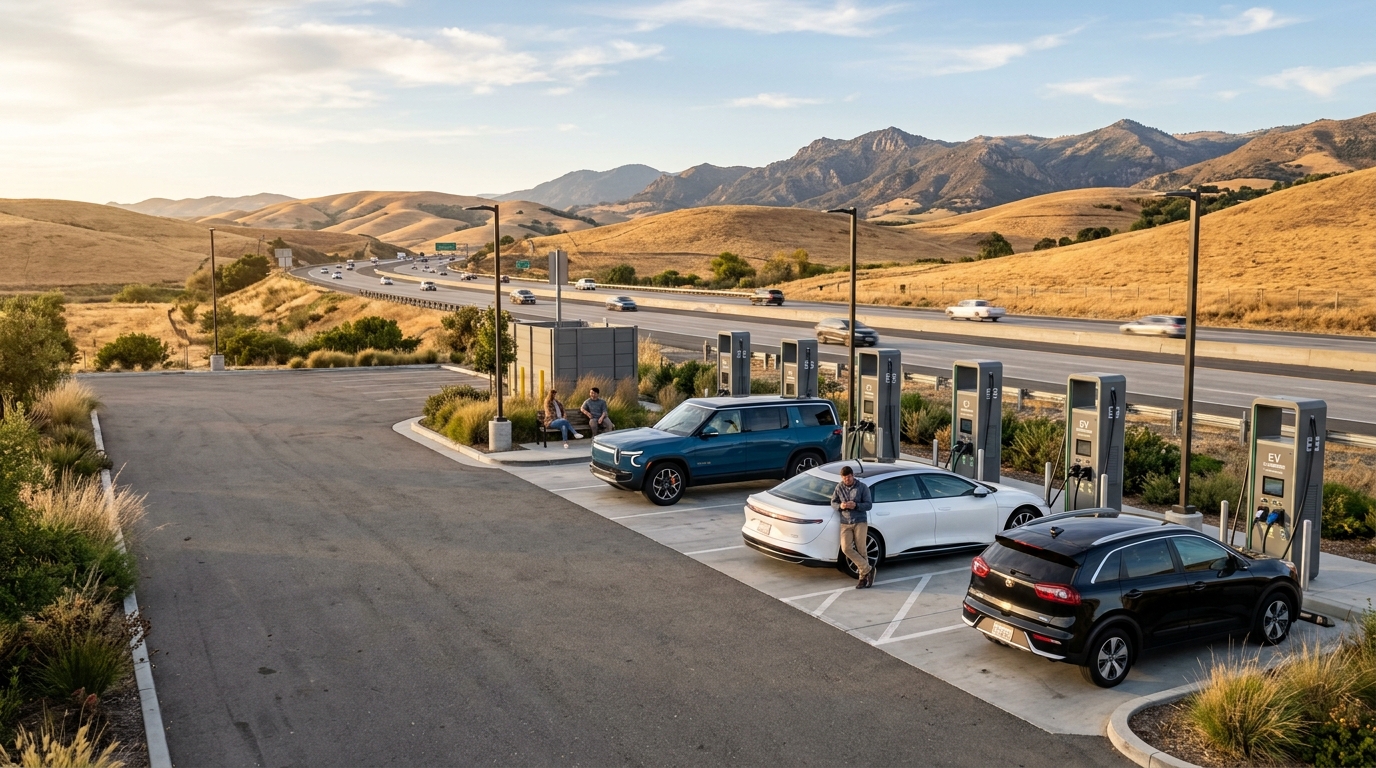
California is not only adding more electric vehicle chargers. In 2026, the state is also tightening the rules around how charging stations are tracked, how reliable certain publicly funded fast chargers must be, and how drivers can pay at newer public stations.
For EV owners, that distinction matters. A large charging network is useful only when the equipment works, payment is straightforward, and drivers can tell whether a station is available before they arrive. California’s newer charger standards are designed to address those everyday problems rather than focusing only on the total number of ports installed.
The California Energy Commission’s EV Charger Data and Reliability Standards took effect in 2026. Among other requirements, covered publicly funded direct-current fast chargers must meet a 97% uptime standard, operators must report reliability data, and newer networked fast chargers have additional technical requirements. Separate California rules also require easier payment options at many newer publicly available chargers, while Plug & Charge is becoming an increasingly important part of the state’s preferred charging experience.
If you drive an EV or are considering one, these changes can affect how dependable public charging becomes over time. You can also explore our California EV charging guide and EV charging directory for related resources.
How California Is Trying to Make Public EV Charging More Reliable
Certain publicly funded fast chargers must meet a 97% uptime standard
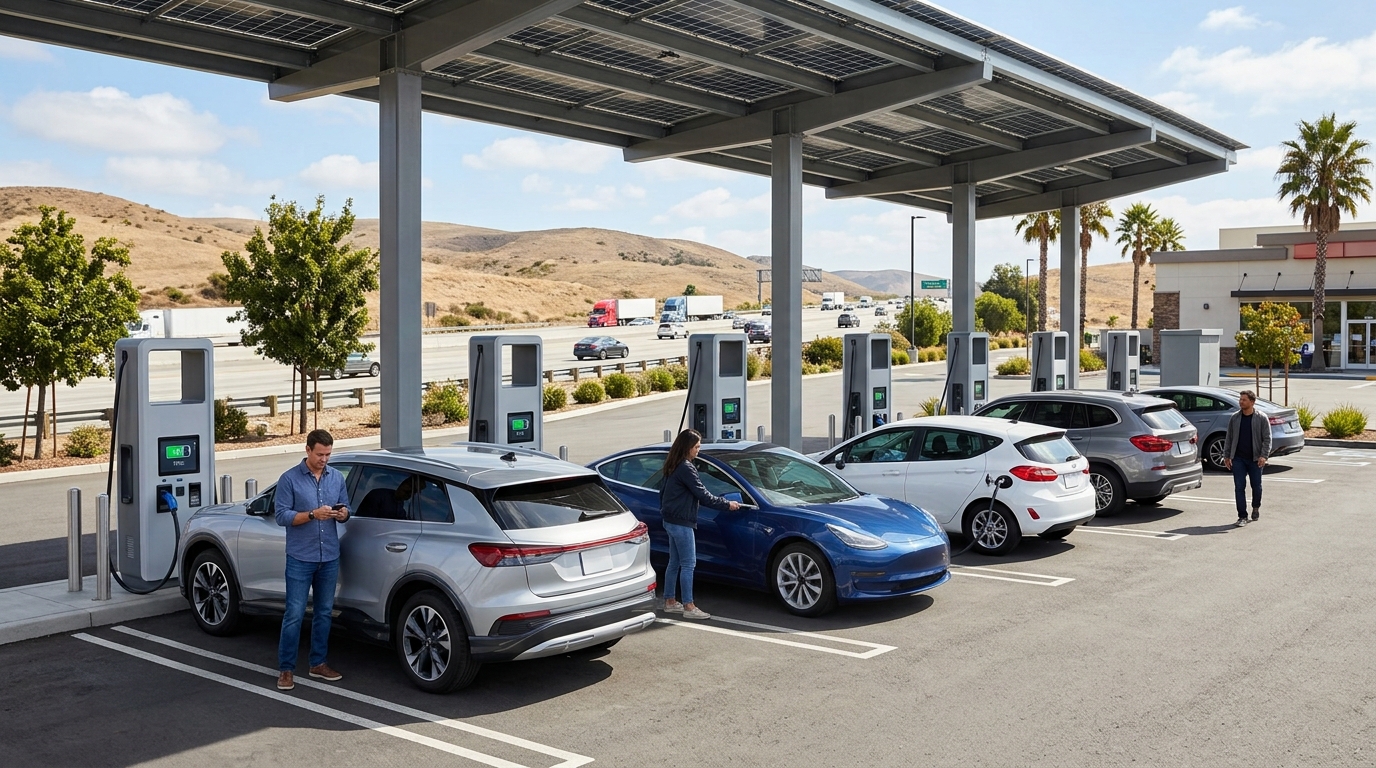
One of the most important parts of California’s new reliability framework is the 97% uptime requirement for certain direct-current fast chargers. According to the California Energy Commission, the standard generally applies to DC fast chargers installed on or after January 1, 2024 that received state, ratepayer, or qualifying federal funding passed through a state agency, subject to specified exceptions.
The standard is measured per charging port rather than simply by charging station. That matters because a site with eight chargers should not be considered fully reliable just because one or two ports still work. Each covered port is evaluated against the uptime requirement.
Uptime means more than simply having power
For these rules, uptime is not just whether a charging cabinet appears to be switched on. The charger’s hardware and software need to be online, the port needs to be available for use, and the charger must be able to successfully dispense electricity.
Some downtime can be excluded from the calculation under the regulations. Examples include qualifying grid power losses, natural disasters, limited periods of planned maintenance, and certain vandalism-related outages. Those exclusions recognize that a charger operator cannot prevent every external interruption.
For drivers, however, the practical goal is much simpler: when a charger is shown as available, it should actually work when they plug in. Reliability is especially important during California EV road trips, where a failed charger can create more than a minor inconvenience if the next fast-charging site is far away.
California also requires covered charging sites to provide a way for customers to report outages or malfunctions. That gives motorists a direct channel for reporting broken connectors, payment failures or other problems that may not be obvious to an operator immediately.
Newer networked fast chargers face additional reporting requirements
California’s standards also create a more detailed reporting system. Covered chargers need to provide reliability information to the California Energy Commission so the state can better understand how the network performs in real-world use.
For networked DC fast chargers installed after September 27, 2026, the Commission says operators must use the Open Charge Point Protocol 2.0.1 and transmit hourly charger data under the state’s reporting specifications. Chargers installed earlier can be subject to semiannual reporting requirements instead.
The first semiannual reporting deadline listed by the Energy Commission is January 31, 2027 for the July through December 2026 reporting period. The purpose is not simply paperwork. Better reliability data can help identify recurring failures, support maintenance planning, and give the state a clearer view of whether publicly supported infrastructure is delivering the service drivers were promised.
California is also collecting better information about where chargers are and how they work
The state’s new standards go beyond uptime. California is building a more complete inventory of charging infrastructure, including information such as charger location, connector type, power level, installation date, network status, payment methods and pricing information.
That can eventually improve the quality of information available to drivers and software developers. A charging map is far more useful when it can distinguish between a Level 2 charger and a high-powered DC fast charger, identify supported connector types, and reflect whether the equipment is actually available.
Better availability data can make trip planning easier
California also requires certain publicly funded networked Level 2 and DC fast chargers to share availability data with third-party software developers through an application programming interface. The Energy Commission says the goal is to increase drivers’ knowledge of charger availability and accessibility.
This matters because EV drivers often rely on vehicle navigation systems and charging apps rather than manually checking individual charging-network websites. If accurate station data can move more consistently between operators and third-party tools, motorists may have a better chance of seeing useful information before reaching the site.
Drivers should still keep a backup charging location in mind, particularly when traveling in remote parts of California. Even a highly reliable network can experience outages, congestion, construction or utility interruptions. Our California road conditions guide can also help with route planning when weather, wildfire activity or highway closures could affect access to a charging stop.
How California’s Payment and Plug & Charge Rules Affect EV Drivers
Newer public chargers are supposed to make payment easier
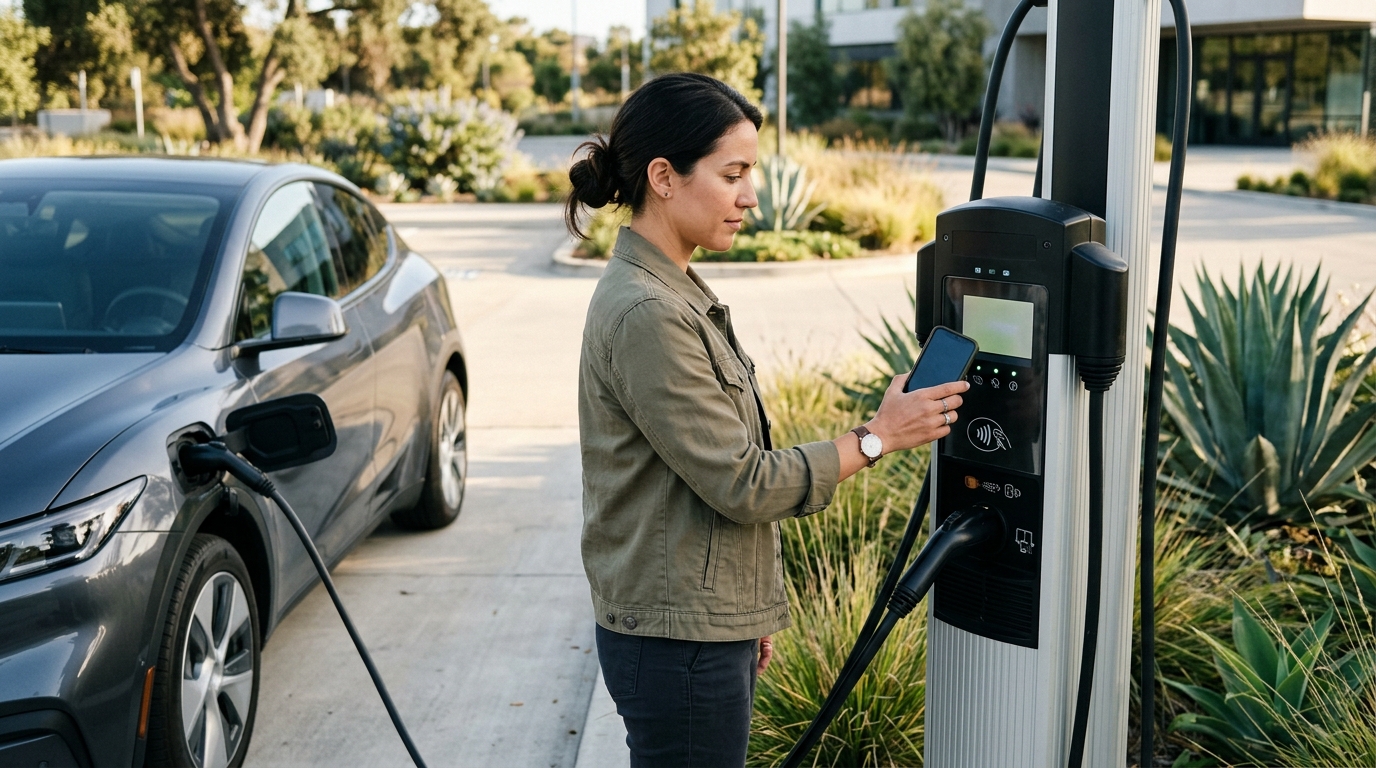
Another common frustration with public charging has been payment. Drivers may arrive at a station only to discover that they need a specific app, have poor cellular service, cannot create an account, or encounter a malfunctioning payment system.
California has adopted requirements intended to reduce that friction. The Energy Commission says publicly available chargers that charge a fee and were installed on or after July 10, 2023 must provide a contactless payment method and either an automated toll-free telephone number or a text-based payment option.
For a driver, the practical benefit is choice. Public charging should not always depend on downloading a new app or setting up a membership before electricity can flow.
Plug & Charge could make public charging feel more like plugging in at home
California is also pushing toward broader availability of Plug & Charge. With compatible vehicles, chargers and accounts, Plug & Charge can authenticate the vehicle and handle payment automatically after the connector is inserted. The driver does not need to open an app, scan a code or interact with a separate payment terminal for each session.
The Energy Commission has described Plug & Charge as the desired driver experience and notes that publicly available DC fast chargers installed on or after July 10, 2023 must include Plug & Charge payment capability using ISO 15118.
That does not mean every EV on the road can use the feature at every charger. The vehicle, charger, charging network and driver account all need compatible support. Drivers should confirm whether their particular vehicle and preferred charging networks support the functionality.
Still, the technology addresses a real reliability problem. A charging attempt can fail even when the electrical equipment is healthy if authentication or payment does not complete correctly. Automating those steps can remove some of the points where a session might otherwise fail.
The bigger picture is that California is moving beyond simply counting charging plugs. The state is increasingly focused on whether those chargers are usable, report accurate information, accept practical payment methods and remain operational over time.
EV drivers
For EV drivers, these rules will not eliminate every bad charging experience in 2026. Many existing chargers are outside the scope of particular requirements, and equipment can still fail. The benefits will also take time to become visible as newer stations are installed and operators begin reporting under the new framework.
Drivers can still improve their own charging experience by checking station status before departure, keeping more than one charging option in mind, understanding their vehicle’s connector and maximum charging rate, and leaving additional battery range when crossing remote areas.
If you are comparing an EV with a gasoline vehicle, charging reliability should be considered alongside purchase price, home-charging access, insurance, maintenance and driving patterns. Our California buying and ownership guides can help you evaluate those broader costs and practical considerations.
California’s new EV charger standards are ultimately about confidence. Drivers are more likely to depend on public charging when they know a station has a meaningful reliability target, the state is collecting performance data, and they have straightforward ways to start and pay for a charging session.
For the official details on reliability, payment and Plug & Charge requirements, review the California Energy Commission’s EV driver experience and charger reliability resources.