
For California rideshare drivers who spend thousands of miles each year behind the wheel, switching from a gasoline vehicle to an electric vehicle can potentially reduce fuel expenses. The biggest obstacle is often the upfront cost of replacing the car.
California is now targeting that problem with a program specifically designed for high-mileage rideshare drivers. The California Public Utilities Commission approved the initial implementation of the Drivers Assistance Program, marketed as Rideshare Incentives for Driving Electric, or RIDE, in July 2026.
Under the initial program structure, qualifying drivers may receive up to $20,300 toward the purchase or lease of a new zero-emission vehicle. A qualifying used zero-emission vehicle can receive up to $14,200, while eligible drivers may also receive up to $1,170 annually to offset charging costs.
Those numbers make RIDE one of the most significant vehicle incentives currently aimed specifically at California rideshare drivers. However, the money is not automatically available to everyone who has driven for an app. Income limits, a substantial trip requirement, vehicle rules and ongoing participation requirements apply.
Drivers considering an EV can also explore our California EV guides, EV charging resources and California vehicle buying and ownership guides before deciding whether switching vehicles makes financial sense.
How California’s RIDE EV Incentive Works
Eligible drivers can receive substantial vehicle and charging assistance
RIDE was created as part of California’s Clean Miles Standard, a program intended to reduce greenhouse gas emissions associated with transportation network companies such as Uber, Lyft and HopSkipDrive. Because rideshare drivers frequently travel many more miles than typical private motorists, replacing a high-mileage gasoline vehicle with a zero-emission model can have a larger transportation impact.
The California Public Utilities Commission approved three primary incentive amounts for the program’s initial year: up to $20,300 for the purchase or lease of a new zero-emission vehicle, up to $14,200 for a qualifying used ZEV, and up to $1,170 for ongoing charging assistance.
The new-vehicle incentive can reach $20,300
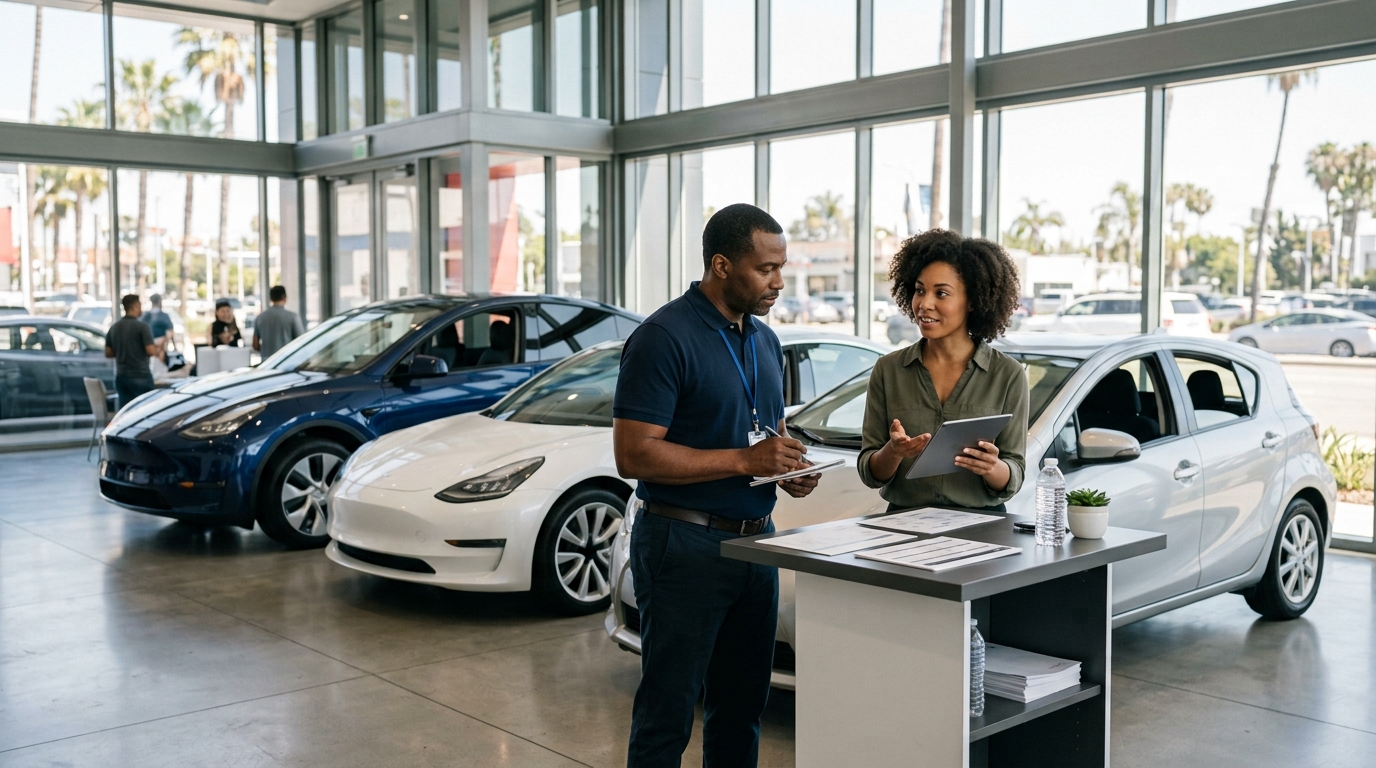
The largest benefit is the new-vehicle purchase or lease incentive. For a driver who qualifies for the full amount, $20,300 could dramatically reduce the gap between keeping an older gasoline-powered car and transitioning to a newer electric vehicle.
The incentive should not be treated as a universal discount available on every EV in California. It is part of a targeted program for qualifying rideshare drivers, and applicants must meet both driving and household-income requirements.
The CPUC established a provisional $25 million first-year program budget, with $22.65 million allocated to incentives. The Commission estimated that the initial budget could support approximately 1,050 new-ZEV incentives at the $20,300 level along with first-year charging assistance.
That means funding availability matters. Drivers interested in the program should not assume that an approved incentive means unlimited money will remain available indefinitely.
A used ZEV can qualify for up to $14,200
Drivers who do not want to purchase a new vehicle may have another option. The approved initial incentive for a used zero-emission vehicle is up to $14,200.
A used EV can sometimes lower the purchase price significantly, but rideshare drivers need to evaluate it differently from a low-mileage personal vehicle. Battery health, warranty coverage, charging speed, usable range and vehicle age become particularly important when the car may travel hundreds of miles during busy working days.
Before buying, consider arranging an independent inspection and checking whether the vehicle meets the requirements of the rideshare platform where you intend to drive. Our California repair and maintenance directory can also help motorists locate vehicle-service resources as the directory expands.
Drivers should compare the complete ownership cost rather than selecting a car only because it qualifies for an incentive. Financing, insurance, tires, registration, depreciation and charging all affect the actual economics of rideshare work.
RIDE has strict income and driving requirements
The size of the incentives is likely to attract attention, but RIDE is intentionally targeted rather than open to every rideshare driver.
The initial minimum driving threshold approved by the CPUC is 4,500 trips across the covered rideshare companies during the previous 12-month period. The threshold may include qualifying trips across Uber, Lyft and HopSkipDrive rather than requiring all 4,500 trips to come from a single company.
Drivers generally need 4,500 trips in the previous 12 months
Four thousand five hundred trips is a substantial requirement. Divided evenly across a year, it works out to roughly 375 trips per month. The requirement reflects the state’s strategy of directing larger incentives toward drivers who accumulate significant rideshare mileage.
The Center for Sustainable Energy, which administers RIDE, is expected to verify trip eligibility using information supplied by participating transportation network companies. Applicants will need to consent to the sharing of information necessary to verify that threshold.
Household income is another major requirement. Under the approved initial rules, drivers generally must have household income at or below 400% of the federal poverty level. Income eligibility may be established through documentation or participation in an eligible income-qualifying program, depending on final program procedures.
Because federal poverty guidelines vary by household size and may change, motorists should use the current RIDE application requirements rather than relying on an old dollar figure from an online article.
The vehicle generally must be kept for at least 36 months
RIDE is intended to put qualifying zero-emission vehicles into sustained rideshare service rather than subsidize a vehicle that is immediately resold. Under the approved structure, a vehicle acquired with the incentive is subject to a 36-month retention requirement.
The implementation plan states that selling the incentivized vehicle before the end of that period is prohibited and could result in repayment obligations.
The CPUC also addressed drivers who already own zero-emission vehicles. During initial implementation, drivers who currently own a ZEV are generally restricted from receiving the upfront incentive. There can be an exception when an existing ZEV is not being used on a covered rideshare platform and the driver attests that the newly incentivized vehicle will be used for qualifying rideshare work.
These details make it important to confirm eligibility before committing to a vehicle purchase. A driver should not buy a car based solely on the expectation of receiving $20,300 and then attempt to qualify afterward without verifying the program’s application process.
Should a California Rideshare Driver Switch to an EV?
The incentive is valuable, but charging and operating costs still matter
A large upfront incentive can change the economics of an electric vehicle, especially for a driver who puts far more miles on a car than a typical household. But the incentive is only one part of the decision.
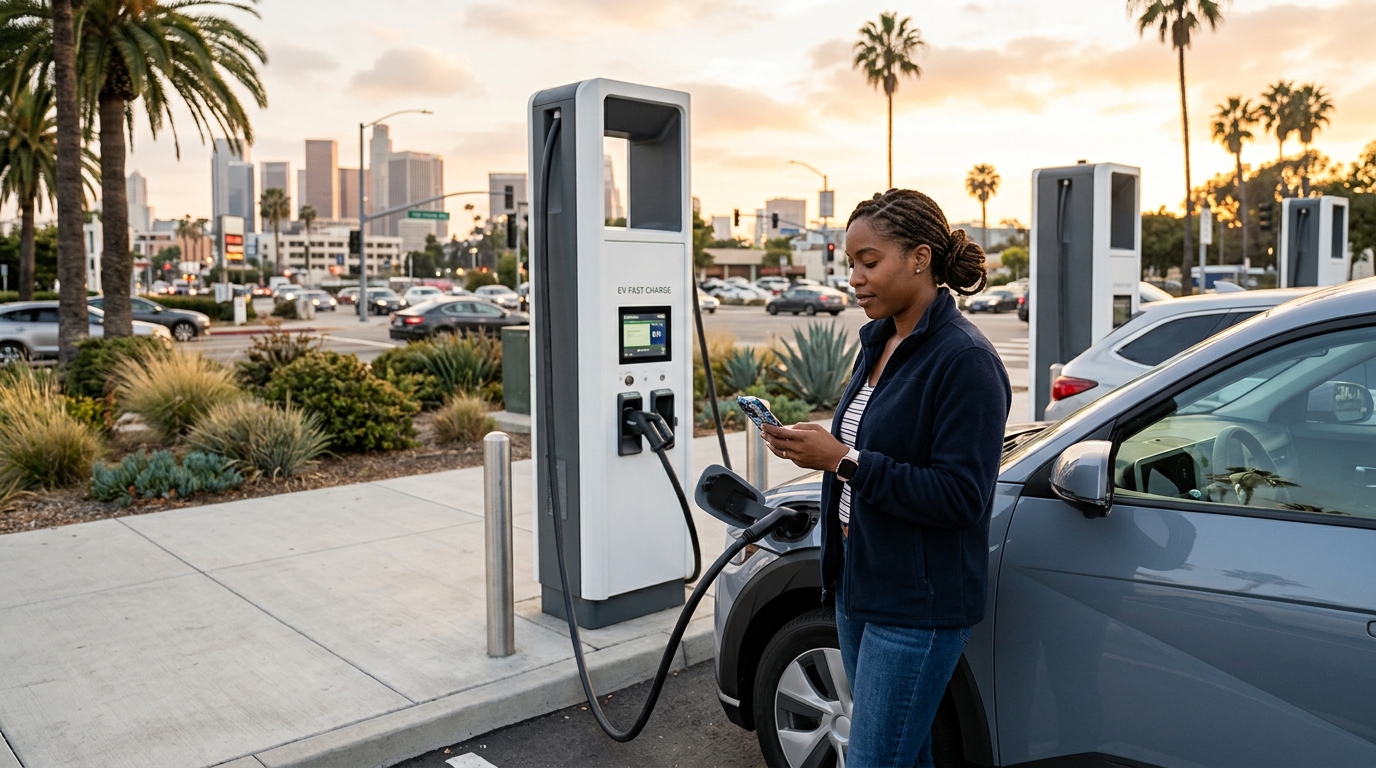
Charging access should be near the top of the checklist. A driver who can reliably charge at home during off-hours may have a very different experience from someone who depends entirely on public DC fast charging.
Public fast charging is convenient, but prices vary, stations can become busy, and charging sessions take longer than filling a gasoline tank. A driver who needs to interrupt a profitable working period to charge should consider that downtime as part of the operating cost.
incentive
The annual RIDE charging incentive of up to $1,170 is designed to help offset some of those expenses. According to the approved structure, drivers must continue meeting program requirements to qualify for ongoing charging assistance. The charging incentive may be available multiple times, with eligibility renewing in 12-month periods under the initial plan.
Range also deserves careful consideration. A vehicle that comfortably handles a normal commute may not be ideal for a driver covering long airport runs, freeway trips and back-to-back passenger requests throughout the day. Compare realistic highway range, charging speed and battery performance rather than relying only on the manufacturer’s maximum range estimate.
Our California EV charging directory and EV road-trip guides can help drivers think about charging availability beyond their normal neighborhood.
Insurance is another factor. Rideshare use can affect coverage requirements, and the cost of insuring one EV may be very different from another. Review the vehicle’s insurance cost before purchase rather than waiting until after financing is complete. See our California auto insurance guides for related information.
Drivers should also look at tire replacement, depreciation, maintenance, financing rates and anticipated annual mileage. EVs eliminate some traditional maintenance items, such as engine oil changes, but they still require tires, brakes, suspension work, cabin filters and other routine care.
RIDE
For the right driver, the RIDE incentive could make an EV significantly more affordable. A high-mileage driver with dependable home charging may be positioned to benefit more than someone who drives only occasionally and relies exclusively on expensive public charging.
Timing matters as well. The CPUC approved RIDE’s initial implementation plan in July 2026 and said the program was anticipated to launch during the third quarter of 2026. Drivers should verify that applications are currently being accepted before making financial decisions based on the incentive.
The approved amounts and eligibility rules can also change as California evaluates the program. The CPUC has specifically provided for future adjustments based on participation, funding, vehicle-market conditions and lessons from the first year.
That makes the official program information more important than any advertisement promising a guaranteed $20,300 EV discount.
For qualifying California rideshare drivers, however, RIDE is a program worth watching closely. Combining up to $20,300 toward a new zero-emission vehicle, up to $14,200 toward a used one and potential charging assistance could substantially reduce the financial barrier to switching from gasoline to electric driving.
For current eligibility, application timing and official program updates, review the California Public Utilities Commission’s RIDE incentive announcement.