California drivers are getting another major signal that the state’s electric vehicle charging network is still expanding. On August 18, 2026, the California Energy Commission approved a $95.2 million Clean Transportation Program investment plan for the 2026–2027 fiscal year. The money is intended to accelerate zero-emission vehicle infrastructure, with the largest direct allocation going toward light-duty electric vehicle charging.
For motorists, the important question is not simply how much California is spending. Drivers want to know whether charging will become easier to find, more reliable and more practical for daily commuting and longer trips. California already has an extensive EV charging network, but drivers can still encounter busy stations, broken equipment, payment problems and limited options along some routes.
The new funding addresses several parts of that system. California says $48 million will support light-duty EV charging, including DC fast charging and at-home or near-home charging. Another $30.2 million targets infrastructure for medium- and heavy-duty zero-emission vehicles. The plan also includes $15 million for hydrogen refueling and $2 million for workforce training.
If you already drive an EV, are thinking about buying one, or regularly take California road trips, the new investment is worth watching.
What Is in California’s 2026 EV Infrastructure Plan?
Light-duty drivers receive the largest direct charging investment
The part of the plan with the most obvious impact on everyday motorists is the $48 million allocated to light-duty electric vehicle charging. The California Energy Commission says that investment will focus on DC fast charging as well as charging at or near people’s homes.
Those two priorities solve different problems. Fast charging is especially important for highway travel, while convenient residential charging makes everyday EV ownership much easier.
$48 million targets light-duty EV charging
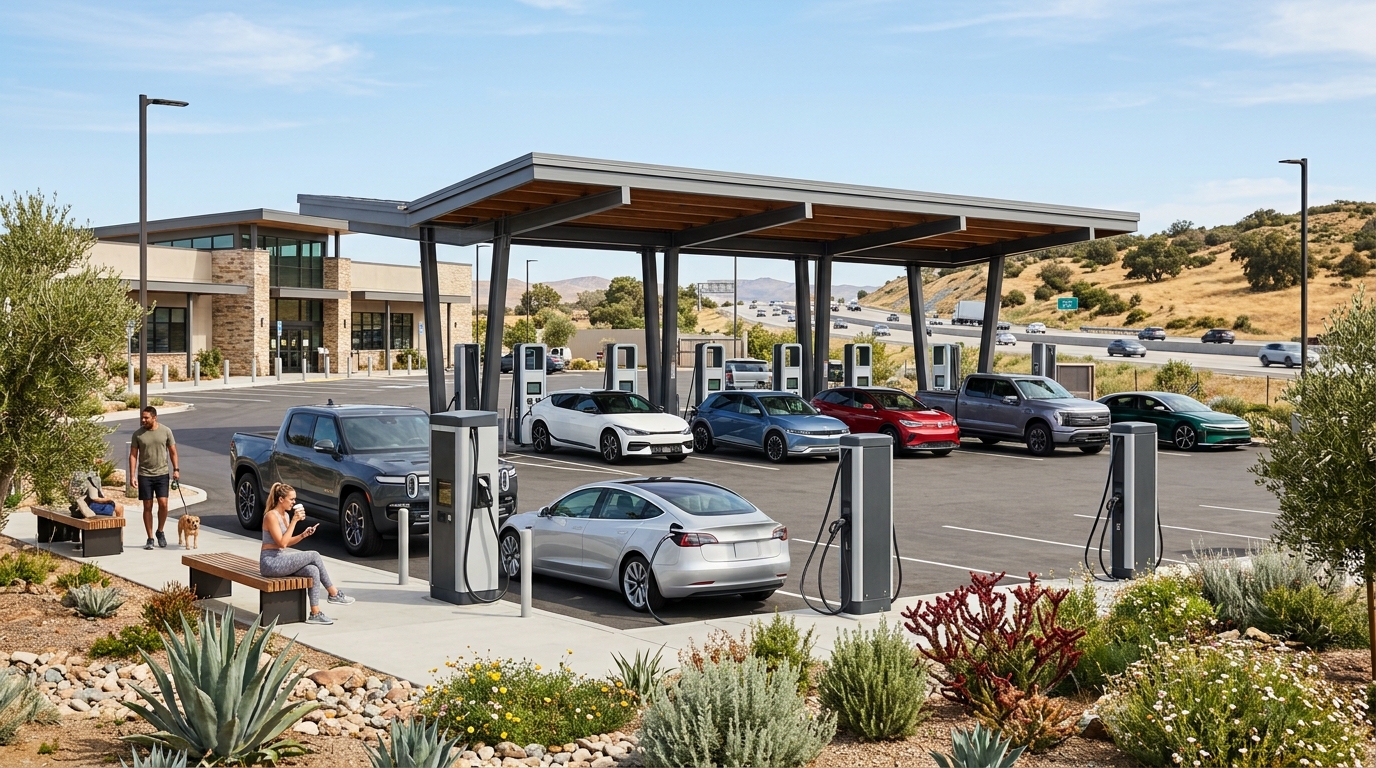
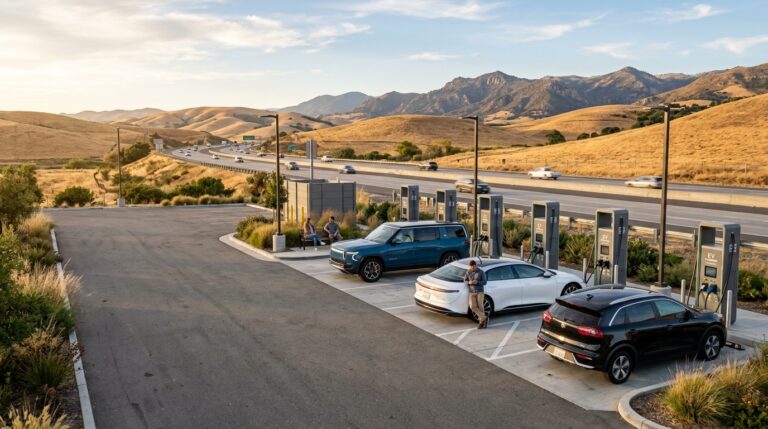
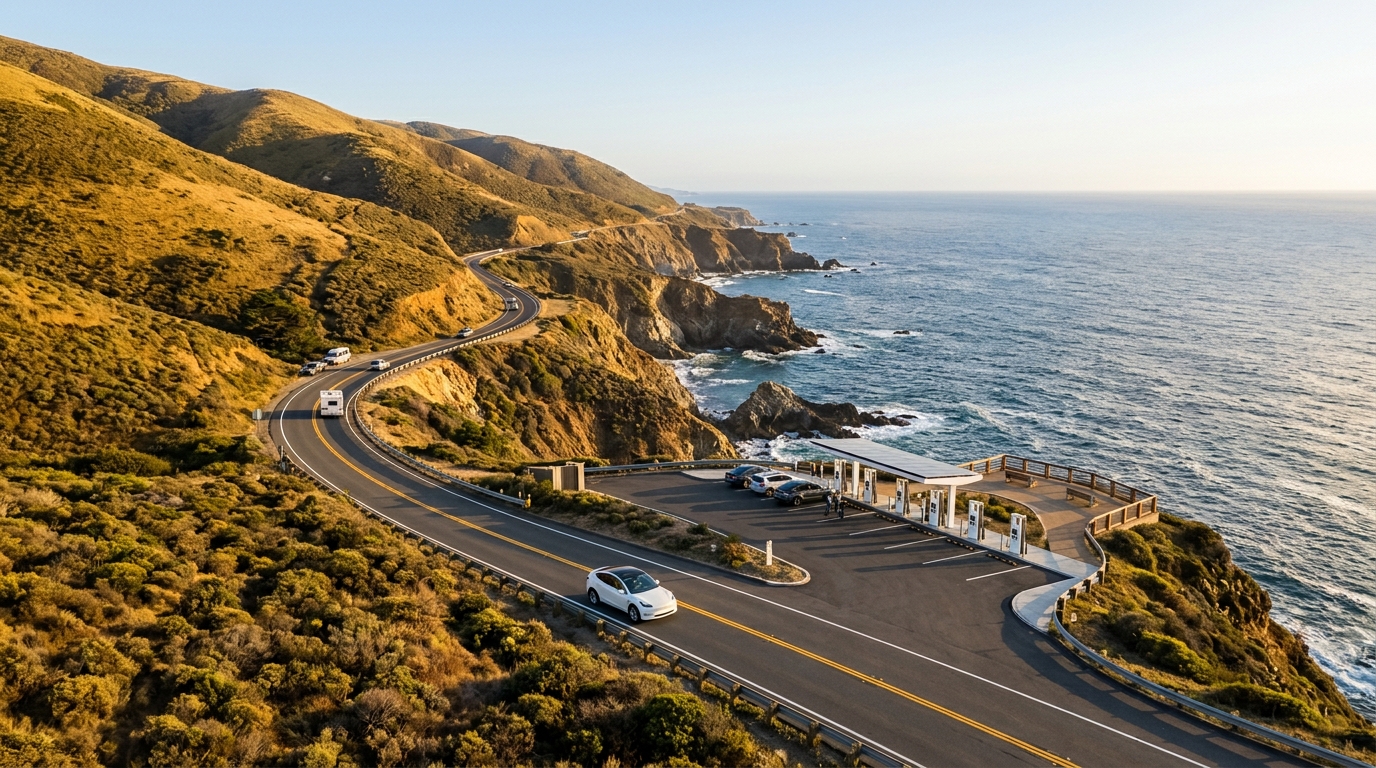
DC fast charging can make the difference between a practical road trip and a frustrating one. A motorist driving between California regions usually does not want to spend several hours at a charger intended primarily for overnight charging. Faster stations can make charging stops more manageable along interstate routes, coastal drives, desert highways and trips between major population centers.
The state is building on years of previous investment. According to the California Energy Commission, its Clean Transportation Program and supplemental state funding have already supported more than 52,000 charging ports that are installed or planned. More than 11,000 of those are DC fast-charging ports.
The practical benefit for drivers is greater route flexibility. More charging locations can reduce dependence on one station and make it easier to choose stops based on restrooms, meals, safety and nearby attractions instead of simply going wherever a charger happens to be available.
Drivers planning longer electric trips can also explore our California EV road-trip guides and EV charging guide before leaving.
Home and near-home charging matters too
Public fast chargers receive much of the attention, but convenient home charging remains one of the biggest advantages of EV ownership. A driver who can charge overnight can begin most mornings with useful range without making a separate fueling stop.
The situation is different for apartment residents, renters and motorists who rely on street parking. Installing a private charger may be impossible, which makes the state’s focus on “at-home or near-home” charging particularly important.
Expanding charging close to residential areas could give more Californians access to an EV without requiring them to depend heavily on expensive or busy fast-charging stations for routine use.
California is also paying more attention to the charging experience itself. Certain newer publicly available chargers must support easier payment methods, and the state continues to promote Plug & Charge technology that can allow compatible vehicles and chargers to handle authentication and payment more seamlessly.
You can also browse our California EV charging directory as the site’s charging resources continue to expand.
Freight, hydrogen and workforce funding can affect the larger network
Passenger-car owners may assume the other allocations have little connection to their driving experience. The relationship is less direct, but California’s transportation network is shared by passenger cars, delivery vehicles, school buses, public fleets, rideshare vehicles and heavy trucks.
Commercial infrastructure can reshape charging corridors
The plan allocates $30.2 million to medium- and heavy-duty zero-emission infrastructure, with an emphasis on freight, ports, public fleets and school buses. These vehicles generally require different equipment and significantly more electrical power than ordinary passenger cars.
Many will charge at dedicated depots rather than public stations. Even so, major investments in electrical infrastructure along freight routes and transportation corridors can influence where additional charging capacity develops.
The plan also allocates $15 million to hydrogen refueling. Battery-electric vehicles dominate much of today’s passenger-EV discussion, but California continues investing in several zero-emission technologies for different transportation uses.
For California motorists, the broader story is that the infrastructure supporting transportation is changing. Highway stops, commercial corridors, fleet facilities and charging hubs may look very different over the next several years.
More technicians are needed to keep chargers operating
The $2 million workforce allocation may be much smaller than the infrastructure investments, but installing chargers is only part of the challenge. Chargers also need to remain functional.
California has increasingly focused on EV charger reliability, uptime reporting and maintenance. The Energy Commission has established performance standards for certain publicly or ratepayer-funded DC fast chargers, and in August 2026 it also announced funding aimed at developing workers qualified to service charging equipment.
A charger shown on a navigation app is not very useful if its connector is damaged, payment terminal does not work or communication system is offline. Qualified technicians are needed to diagnose failures and return equipment to service.
For drivers, reliability could ultimately matter just as much as the total number of chargers installed.
What the Expansion Means for California EV Drivers
Road trips could become easier, but drivers should still plan ahead
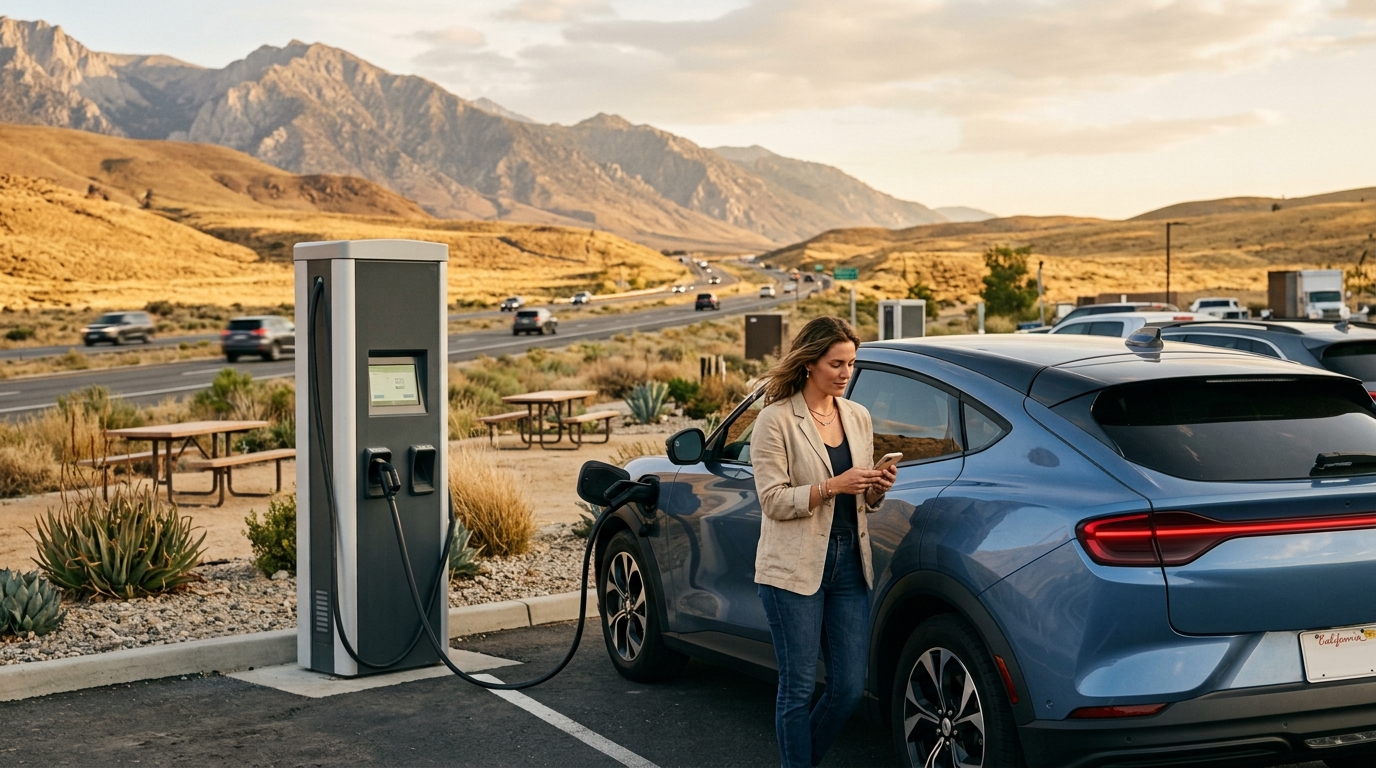
The $95.2 million investment should be viewed as a continuing expansion of California’s zero-emission transportation system, not as a guarantee that every route will immediately have abundant charging.
Infrastructure projects require planning, permits, utility connections, construction and maintenance. Some benefits of the newly approved funding will therefore take time to reach motorists.
EV drivers should continue checking charging availability before longer journeys and identify at least one backup charging stop, particularly when traveling through remote desert areas, mountain regions or less-developed highway corridors.
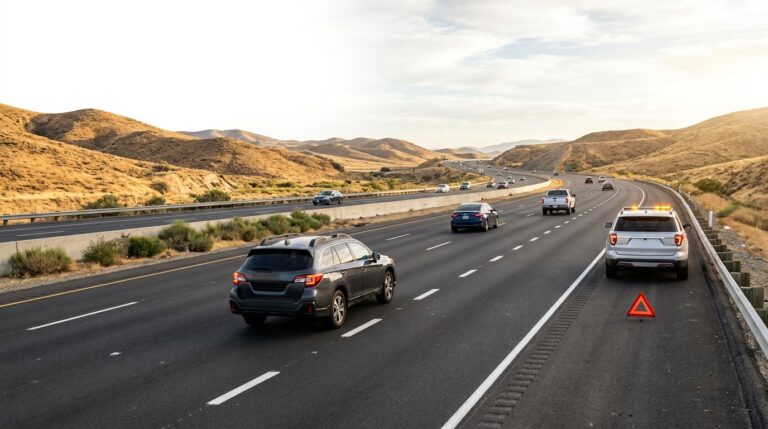
Route conditions matter too. California drivers regularly deal with highway construction, wildfire closures, winter chain controls, crashes and other disruptions. A planned charging stop becomes much less useful if the highway leading to it is temporarily closed. Our California road conditions guide can help make route checking part of your trip preparation.
Drivers should also distinguish between charger quantity and charger quality. A useful charging station needs more than a parking space and a plug. Power output, reliability, payment options, the number of working stalls, lighting, nearby facilities and the ability to reach another charger if the station is unavailable can all affect the experience.
electric vehicle
For people deciding whether to purchase an electric vehicle, California’s new infrastructure investment is another indication that charging remains a major state transportation priority. That does not automatically mean an EV is right for every household.
Potential buyers should consider whether they can charge at home, their daily mileage, electricity costs, insurance, purchase price and how frequently they make long-distance trips. Our California car ownership guides cover additional factors that motorists should consider before choosing their next vehicle.
Current EV owners can make the growing network work better by learning the maximum charging speed their vehicle accepts, saving reliable stations they use regularly and avoiding arrival at isolated chargers with almost no remaining battery. During busy travel periods, having a second charging option can prevent a minor delay from turning into a major problem.
California’s $95.2 million program will not transform EV driving overnight. However, the $48 million specifically allocated to light-duty charging could eventually make both daily charging and longer-distance driving more convenient.
The real measure of success will not simply be how many new charging ports appear on a map. California motorists need chargers that work, are easy to pay for, provide useful charging speeds and are located where drivers actually need them.
For the official details behind the funding announcement, see the California Energy Commission’s 2026 Clean Transportation Program announcement.